
2026-11-06
November 3–5: The 2026 AEE Shanghai Automotive Chassis Exhibition was held at the Shanghai World Expo Exhibition & Convention Center.
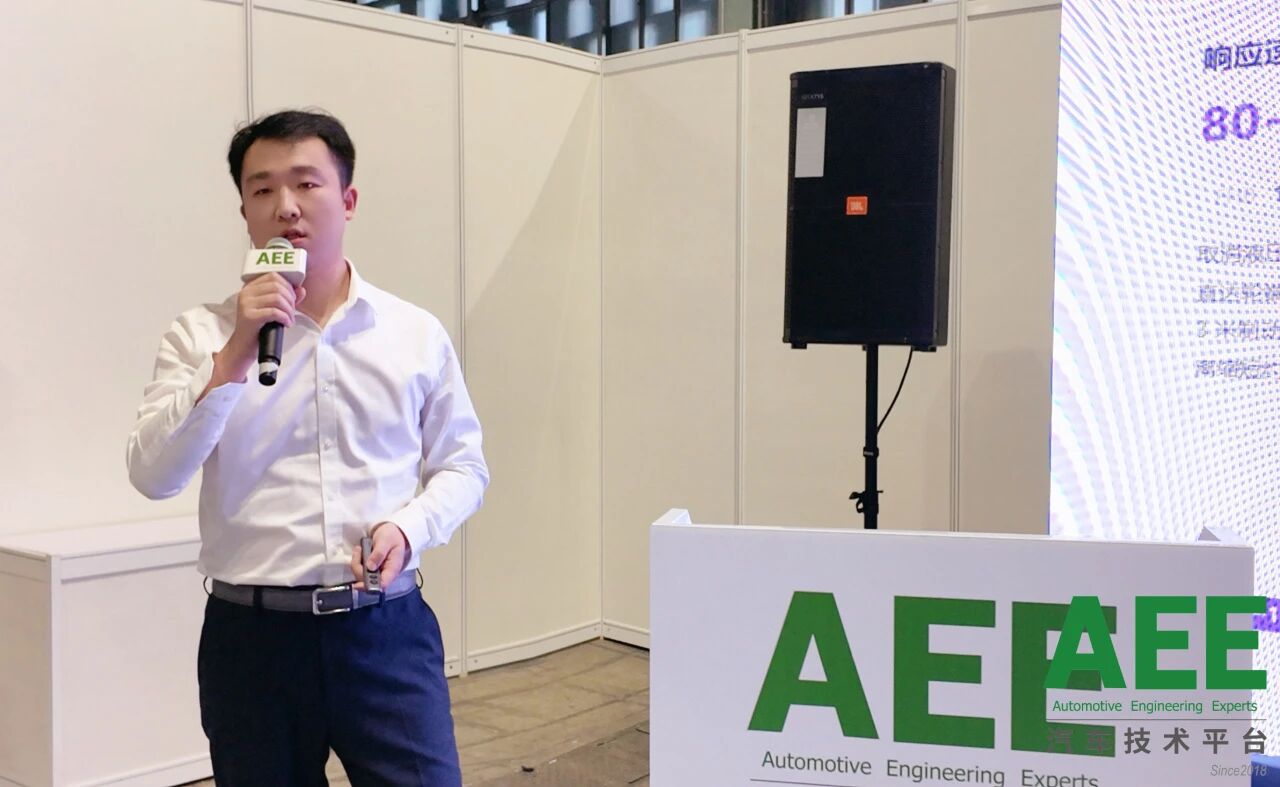
Liu Yanpeng, Deputy Director of Software Development at BIBO, was invited to deliver a keynote speech titled High-Precision Force Control × 48V: The Technical Architecture of BIBO’s EMB.
As a leading domestic intelligent chassis enterprise, BIBO keeps spearheading the R&D of electro-mechanical brake (EMB) systems, building first-mover advantages in development timeline and core technologies. The new national standard GB 21670-2025 is highly aligned with the ETBS requirements of UN R13-H. BIBO develops its EMB systems directly for the globally harmonized regulatory framework, paving the way for compliance in overseas markets.
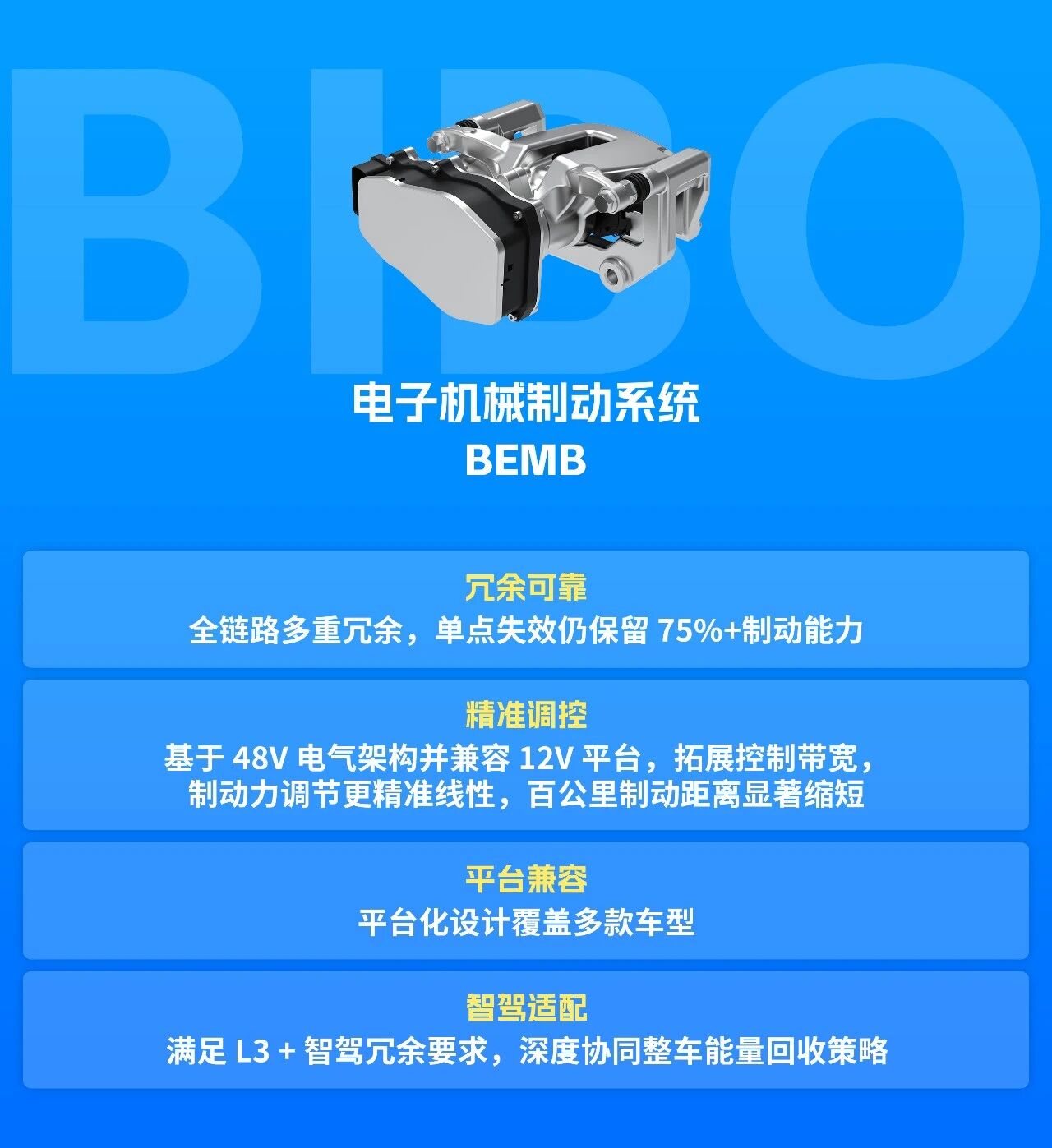
BIBO’s BEMB electro-mechanical brake system adopts an all-dry electro-mechanical architecture with hydraulic lines completely eliminated. Independent electronic control for four wheels enables millisecond-level precise braking and markedly shortens the 100‑km/h braking distance. In terms of electrical architecture, it is built on a 48V electrical platform with 12V compatibility, extending control bandwidth and delivering more accurate and linear brake force modulation. For functional safety, it is designed to ASIL D, the highest functional safety level, with multi-layer redundancy across the whole chain; over 75% braking capacity is retained even upon a single-point failure. On the software side, it features tiered functional safety design, supports function offloading to higher layers, enables deep coordination with vehicle energy recovery strategies, adapts to software modules of the BEAT 2.0 platform, and facilitates the development of three-axis fusion functions.
As an architecturally innovative product balancing safety, performance and cost, BIBO BEMB meets the redundancy requirements for L3+ intelligent driving — delivering faster, safer and more cost-effective braking.
Phone: 010-63940482
Email: bibo@bibo-sh.cn
Investment Cooperation: 16621178430
BIBO Official Account