

2026-10-29
SAECCE 2026, the 33rd Annual Congress of the Society of Automotive Engineers of China together with the AITX Automotive Innovation Technology Exhibition, was held at Suzhou International Expo Center from October 27 to 30.
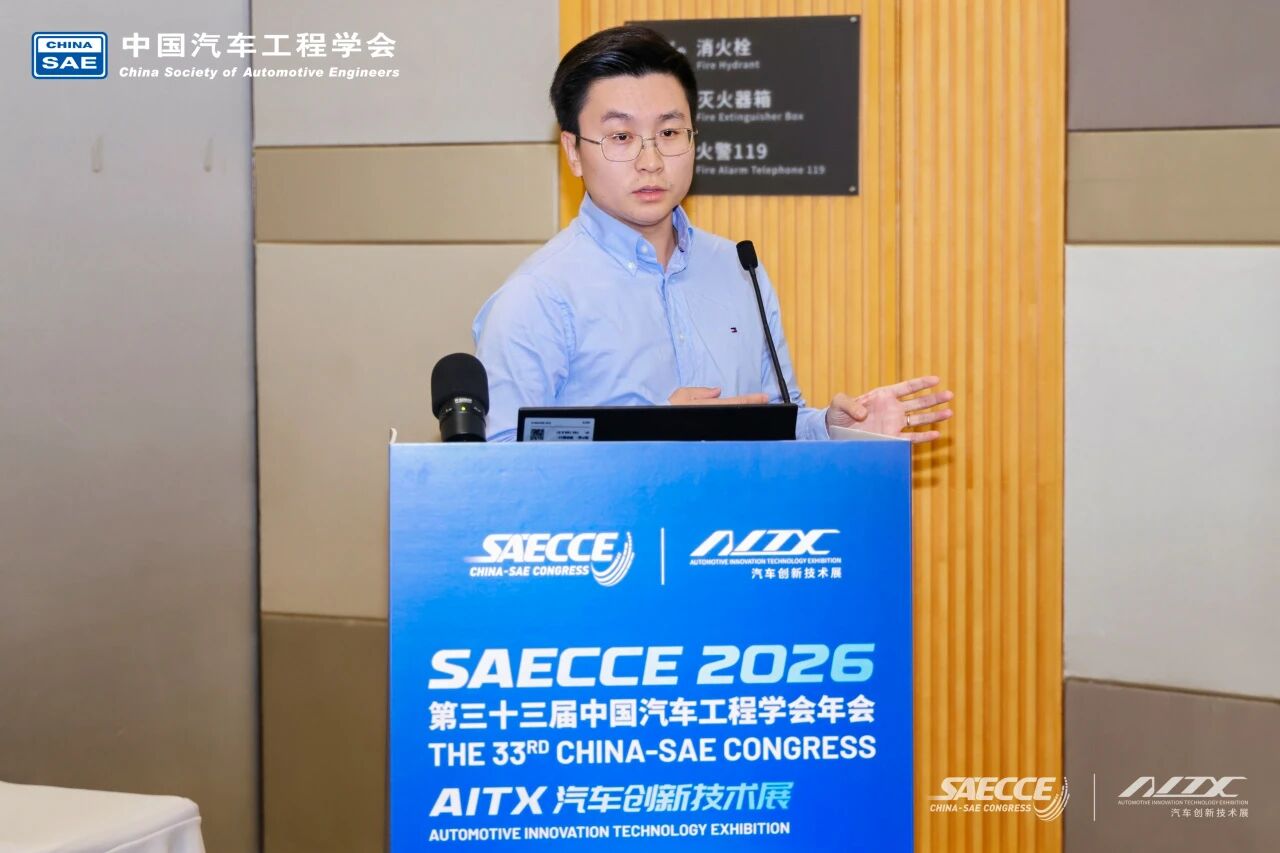
Dr. Zheng Sheng, Director of Software Development at BIBO, delivered a keynote speech entitled New Paradigm for Chassis Electronic Control AI + Simulation Development – BIBO BEAT 2.0 Software Platform. He introduced the BEAT 2.0 software platform and the practical applications of AI in chassis electronic control development.
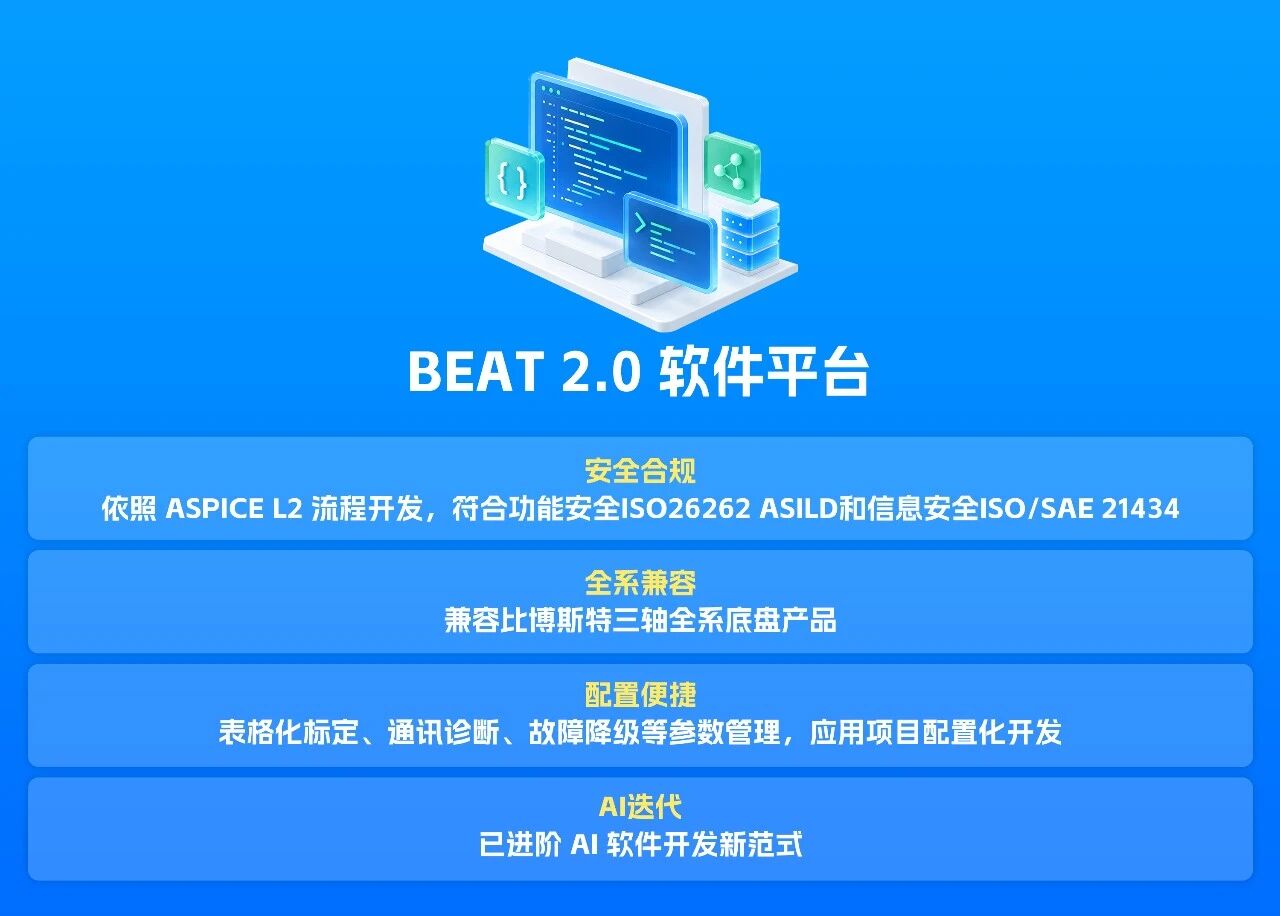
The BIBO BEAT 2.0 software platform is developed based on the classic AUTOSAR architecture and functional safety methodology, compliant with ASPICE processes. It features standardized modularity, configurable applications and collaborative product development. Supported by an automated continuous integration and testing system, it enables efficient software iteration. To address the industry’s demand for rapid cost reduction, the platform adopts an innovative architecture of “minimum system engineering plus plug-and-play complex drivers”. When replacing chips, motors or solenoid valves, only the corresponding adaptation packages need to be updated without altering upper-layer software, facilitating fast adaptation to domestic chips.
In terms of AI implementation, BIBO has integrated AI into the full workflow covering requirement analysis, functional safety design, code development, parameter calibration, quality review and test validation. For simulation and verification, the company leverages end-user data for AI-powered scene cleansing, classification and generation to rapidly enrich the edge-case scenario library. AI also performs self-tuning on vehicle dynamics models and actuator physical models, allowing performance calibration and issue reproduction directly on hardware-in-the-loop benches. Furthermore, BIBO has built an AI system for the full business chain based on local large models and the enterprise knowledge base. Domain-specific agents for software development, project management, quality management, simulation testing and other functions work collaboratively to interconnect data across systems and achieve full-process traceability. According to Dr. Zheng Sheng, the new development paradigm of AI + Simulation can effectively shorten development cycles while safeguarding functional safety.
Phone: 010-63940482
Email: bibo@bibo-sh.cn
Investment Cooperation: 16621178430
BIBO Official Account